- Joined
- Nov 21, 2019
- Messages
- 6,900
- Reaction score
- 127,102
- Points
- 11
- Age
- 55
- Location
- Орёл
- 💎VM
- 442,398.50
- New country
- 🌐Единия
- Enneatype
- 5 (?)
- Gender
- Male
- Ashram resident
- Yes
In 2014, I created a new section on the Your Yoga website - here. It launched a wave of publications of Christ’s prayer in Aramaic across various blogs and websites...
If you do not believe this, simply look at the fact that all the publications appeared after 2014, that is, after I did this.
But there are also other words of Christ in Aramaic that have come down to us. Special words. They are not a prayer like the Our Father, but now I will tell you what makes them special.
For example, there is a phrase of Christ after which someone stood up and walked. Of course, do not think that everything depends only on this one phrase. Just as with a mantra. No. And yet...
And you already understand that Christ did not say exactly “get up and walk.” He pronounced it in Aramaic. And it sounded completely different from “get up and walk.”
It sounded like this in Aramaic: Talitha koumi
Which means: Get up and walk.
I especially want to emphasize that this is not made up. The Greek translation of the Gospel contains these phrases in Aramaic. They simply left this word untranslated, inserting it in Aramaic but in Greek transliteration.
Just as the word “apple” can be written as “eppel.”
“And taking the girl by the hand, he said to her, ‘Talitha koumi,’ which means, ‘Little girl, I say to you, get up,’” Jesus Christ said to Jairus’s dead daughter (Mark 5:41).
“Her spirit returned, and she immediately stood up, and He instructed them to give her something to eat.” (Luke 8:55).
But there is a catch. When we say the word “eppel” in Russian, it does not mean that we reproduce the original word exactly. Only approximately.
Likewise, “Talitha koumi” requires explanation in order to reproduce the original more accurately.
And the first important thing is stress. I will now write it with the stress marked, highlighting it in red letters:
And now the phrase may begin to sound different if you previously pronounced it with different stress. Talifaaa Kumiii.
Koumi means “get up.”
Talitha means “walk.”
But! Christ did not say it exactly that way!
Although you read it that way. The problem is the word “koumi.” This word was transmitted through different dialects. But we need to know how Christ said it, not how it was said in different dialects.
Koumi is an address to a woman. And koum is an address to a man. That is, “get up” depends on gender.
However, in Christ’s time, the gender distinction in this Aramaic word no longer existed. The word “koum” was always used, for both men and women.
And this means that the stress was different too!
And now we can say with a high degree of confidence that Christ said exactly this:
I have highlighted the stress in red again for you. A closed syllable at the end. As in the mantra words OM, AUM, HUM...
I do not think I need to explain the meaning of these words to you. These words are the culmination of Christ’s healing Power. He restored sight to some people, and also said words before doing so; for others, it was something else... But to simply raise a person from the dead—that is the culmination of everything known to us.
Of course, the meaning of Christ’s Teaching is that, essentially, we all need to be resurrected. We are all like walking dead here. We sleep and hardly live at all. That is why Christ’s deeds are full of symbolism. Talitha Koum can be directed at each of us, to resurrect us to Eternal Life. Therefore, try the practice I would like to give you.
Pronounce “Talitha Koum!” imagining that Christ is addressing you, ordering you to COME ALIVE, become eternal, and be resurrected...
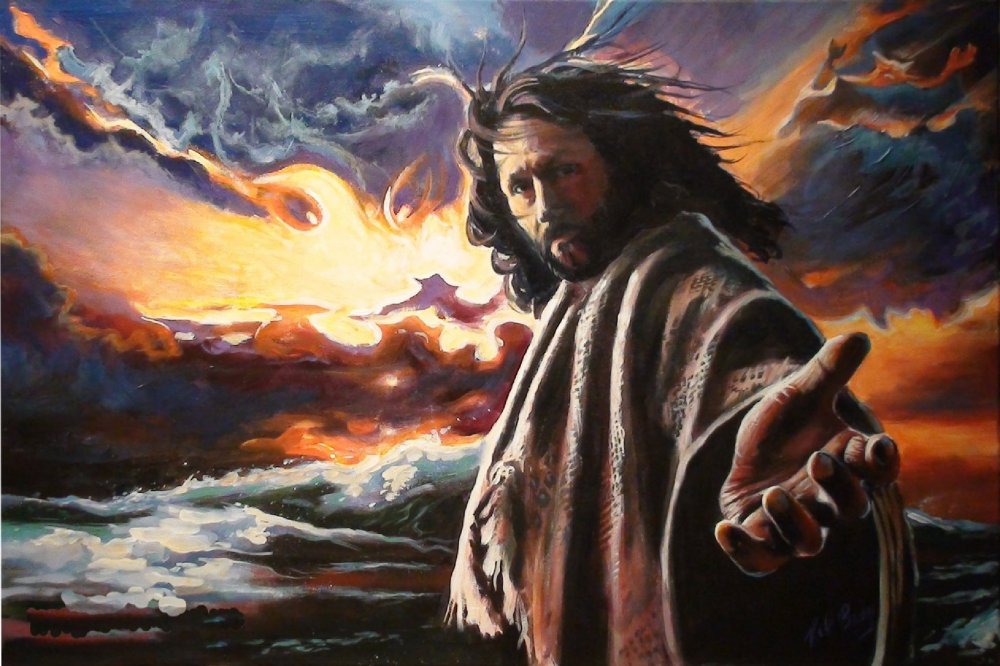
I want to share my opinion about Christ’s language. I did not say this on the Your Yoga website, but I will say it here.
There is absolutely no doubt that Greek was commonly spoken where Christ lived, was born, and spent the most famous years of His life recorded for us. In general, many people in that region knew Greek. Therefore, Christ could have given the Our Father prayer in both Aramaic and Greek. Everyone in that area knew Aramaic, while not everyone knew Greek; it was known mainly by educated people. For example, today everyone knows Russian, while English is known mainly by more educated people. This is just an analogy to help you understand.
Therefore, what I provided for you in the link above, leading to the Your Yoga website, may be two originals of Christ’s prayer. But one is recorded in Aramaic and the other in Greek. And both are ORIGINALS.
Christ could certainly have known that people would wish to alter this prayer in any way they pleased and could have anticipated this, so giving it in Greek at that time meant giving it to his descendants. That is, to us.
Although the Aramaic language is still alive, it is dying out. The same cannot be said of Greek, since it has flowed into Russian and lives on in it, as it does in other languages.
If you do not believe this, simply look at the fact that all the publications appeared after 2014, that is, after I did this.
But there are also other words of Christ in Aramaic that have come down to us. Special words. They are not a prayer like the Our Father, but now I will tell you what makes them special.
For example, there is a phrase of Christ after which someone stood up and walked. Of course, do not think that everything depends only on this one phrase. Just as with a mantra. No. And yet...
And you already understand that Christ did not say exactly “get up and walk.” He pronounced it in Aramaic. And it sounded completely different from “get up and walk.”
It sounded like this in Aramaic: Talitha koumi
Which means: Get up and walk.
I especially want to emphasize that this is not made up. The Greek translation of the Gospel contains these phrases in Aramaic. They simply left this word untranslated, inserting it in Aramaic but in Greek transliteration.
Just as the word “apple” can be written as “eppel.”
“And taking the girl by the hand, he said to her, ‘Talitha koumi,’ which means, ‘Little girl, I say to you, get up,’” Jesus Christ said to Jairus’s dead daughter (Mark 5:41).
“Her spirit returned, and she immediately stood up, and He instructed them to give her something to eat.” (Luke 8:55).
But there is a catch. When we say the word “eppel” in Russian, it does not mean that we reproduce the original word exactly. Only approximately.
Likewise, “Talitha koumi” requires explanation in order to reproduce the original more accurately.
And the first important thing is stress. I will now write it with the stress marked, highlighting it in red letters:
Talifa kumi
And now the phrase may begin to sound different if you previously pronounced it with different stress. Talifaaa Kumiii.
Koumi means “get up.”
Talitha means “walk.”
But! Christ did not say it exactly that way!
Although you read it that way. The problem is the word “koumi.” This word was transmitted through different dialects. But we need to know how Christ said it, not how it was said in different dialects.
Koumi is an address to a woman. And koum is an address to a man. That is, “get up” depends on gender.
However, in Christ’s time, the gender distinction in this Aramaic word no longer existed. The word “koum” was always used, for both men and women.
And this means that the stress was different too!
And now we can say with a high degree of confidence that Christ said exactly this:
Talifa kou
I have highlighted the stress in red again for you. A closed syllable at the end. As in the mantra words OM, AUM, HUM...
I do not think I need to explain the meaning of these words to you. These words are the culmination of Christ’s healing Power. He restored sight to some people, and also said words before doing so; for others, it was something else... But to simply raise a person from the dead—that is the culmination of everything known to us.
Of course, the meaning of Christ’s Teaching is that, essentially, we all need to be resurrected. We are all like walking dead here. We sleep and hardly live at all. That is why Christ’s deeds are full of symbolism. Talitha Koum can be directed at each of us, to resurrect us to Eternal Life. Therefore, try the practice I would like to give you.
Pronounce “Talitha Koum!” imagining that Christ is addressing you, ordering you to COME ALIVE, become eternal, and be resurrected...
I want to share my opinion about Christ’s language. I did not say this on the Your Yoga website, but I will say it here.
There is absolutely no doubt that Greek was commonly spoken where Christ lived, was born, and spent the most famous years of His life recorded for us. In general, many people in that region knew Greek. Therefore, Christ could have given the Our Father prayer in both Aramaic and Greek. Everyone in that area knew Aramaic, while not everyone knew Greek; it was known mainly by educated people. For example, today everyone knows Russian, while English is known mainly by more educated people. This is just an analogy to help you understand.
Therefore, what I provided for you in the link above, leading to the Your Yoga website, may be two originals of Christ’s prayer. But one is recorded in Aramaic and the other in Greek. And both are ORIGINALS.
Christ could certainly have known that people would wish to alter this prayer in any way they pleased and could have anticipated this, so giving it in Greek at that time meant giving it to his descendants. That is, to us.
Although the Aramaic language is still alive, it is dying out. The same cannot be said of Greek, since it has flowed into Russian and lives on in it, as it does in other languages.
Last edited: