

- Joined
- Nov 21, 2019
- Messages
- 6,900
- Reaction score
- 127,110
- Points
- 11
- Age
- 55
- Location
- Орёл
- 💎VM
- 442,401.50
- New country
- 🌐Единия
- Enneatype
- 5 (?)
- Gender
- Male
- Ashram resident
- Yes
Someone might ask me: what about the other six diaphragms?
Yes, they exist.
And they are all important.
Moreover, all the diaphragms are interconnected.
1. Foot diaphragm (FD) —this is the arch of the foot. Essentially, when a person has, for example, flat feet, this is a pathology of this diaphragm, or rather, a degree of flatfoot.
2. Knee-joint diaphragm (KJD)—if you lie down and bend your legs so that your knees are raised, the arch beneath the knee is this diaphragm.
3. Pelvic-floor diaphragm (PFD)—it stabilizes the pelvis and supports the pelvic organs.
It is attached to the pelvic bones.
4. Thoracoabdominal diaphragm (TAD)—this is the best-known diaphragm, which participates in breathing.
5. Diaphragm of the superior thoracic aperture (DSTA)—it fixes the upper pole of the lung. Visually, this diaphragm is formed by the fasciae of the two uppermost ribs, like a bell.
6. Oral diaphragm (submandibular diaphragm)—it stabilizes the hyoid bone and lower jaw in the horizontal plane.
7. Sella turcica—here I will probably show it in a picture.

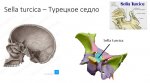
All the diaphragms form a chain. For example, dysfunction of the foot diaphragm leads to disruption of the entire chain of diaphragms. We often see this in people. The knee gives way, the spine becomes misaligned, and everything starts working incorrectly...
Yes, they exist.
And they are all important.
Moreover, all the diaphragms are interconnected.
1. Foot diaphragm (FD) —this is the arch of the foot. Essentially, when a person has, for example, flat feet, this is a pathology of this diaphragm, or rather, a degree of flatfoot.
2. Knee-joint diaphragm (KJD)—if you lie down and bend your legs so that your knees are raised, the arch beneath the knee is this diaphragm.
3. Pelvic-floor diaphragm (PFD)—it stabilizes the pelvis and supports the pelvic organs.
It is attached to the pelvic bones.
4. Thoracoabdominal diaphragm (TAD)—this is the best-known diaphragm, which participates in breathing.
5. Diaphragm of the superior thoracic aperture (DSTA)—it fixes the upper pole of the lung. Visually, this diaphragm is formed by the fasciae of the two uppermost ribs, like a bell.
6. Oral diaphragm (submandibular diaphragm)—it stabilizes the hyoid bone and lower jaw in the horizontal plane.
7. Sella turcica—here I will probably show it in a picture.
All the diaphragms form a chain. For example, dysfunction of the foot diaphragm leads to disruption of the entire chain of diaphragms. We often see this in people. The knee gives way, the spine becomes misaligned, and everything starts working incorrectly...


