

- Joined
- Nov 21, 2019
- Messages
- 6,944
- Reaction score
- 128,415
- Points
- 11
- Age
- 55
- Location
- Орёл
- 💎VM
- 449,793.50
- New country
- 🌐Единия
- Enneatype
- 5 (?)
- Gender
- Male
- Ashram resident
- Yes
Abuse — is cruel treatment, causing harm, suppressing another person, and violating their boundaries. It can manifest in different ways:
- **Physical** — hitting, pushing, causing pain.
- **Psychological** — humiliation, intimidation, constant belittling.
- **Emotional** — manipulating feelings, blackmail, exploiting feelings of guilt.
- **Financial** — controlling money, creating economic dependence.
- **Controlling** — isolating a person, limiting their freedom and independence.
Abuse may involve repeated behavior aimed at establishing power and control.
DARVO — a mechanism for shifting blame.
This is one of the ways a person may justify their own aggression and evade responsibility.
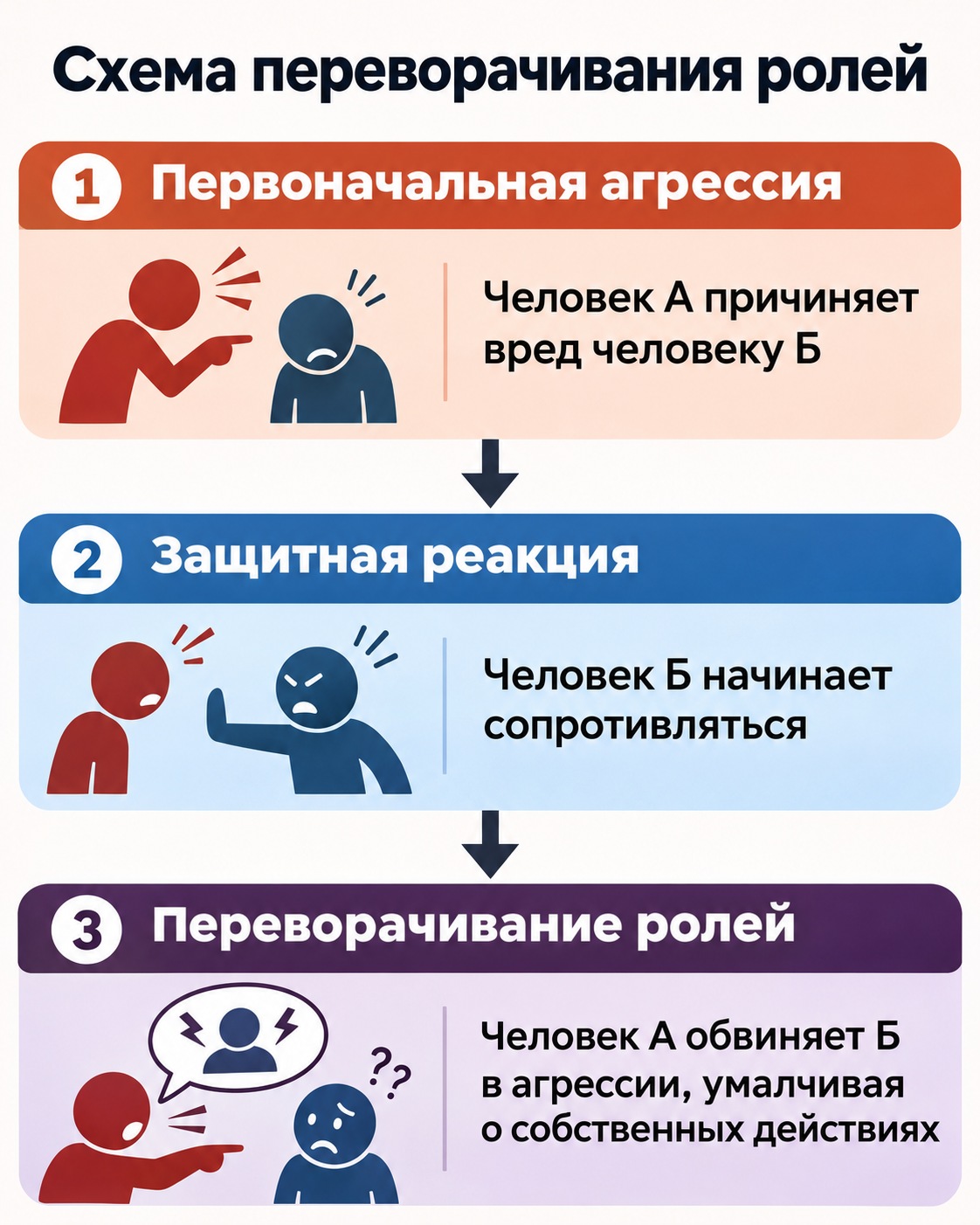
The distinctive feature of this mechanism is that the aggressor turns the victim’s response into the main accusation against the victim themselves.
The sequence is as follows:
And what is the key sign of abuse?
When speaking specifically about psychological abuse in relationships, one of the central signs is a persistent pattern of behavior in which one person causes psychological harm to another and suppresses them or seeks to control them.
Reversing the roles of victim and aggressor is one of the possible mechanisms of their abuse.
It is precisely this substitution of cause and effect that often makes such relationships particularly confusing: the person now has to do more than defend themselves against the initial aggression—they have to justify their own self-defense.
Abuse is not limited to physical violence. It also includes psychological pressure, humiliation, suppression of freedom, and an attempt to control another person.
But I want to draw attention to one of the most characteristic mechanisms of abuse.
The concept of **DARVO** is a psychological tactic in which the aggressor tries to switch places with the victim.
Imagine the following situation. One person commits acts of violence against another. The victim begins to defend themselves. The aggressor then unexpectedly shifts all attention to this defensive reaction, presenting themselves as the victim and the person defending themselves as the aggressor.
**As a result, it is no longer the initial violence that is being discussed, but the victim’s reaction to it.**
But what is most interesting is that this mechanism can be observed not only in relationships between people, but also on a much broader scale.
For example, in relations between states.
One country commits aggression against another. The other country begins to defend itself. The aggressor country then focuses all attention on the retaliatory actions, accusing the other side of violence, cruelty, and aggression. At the same time, its own initial actions are concealed or justified.
**A similar pattern can also be observed in relations between the authorities and the people.**
Let us imagine that the authorities begin restricting citizens’ freedom, suppressing their rights, and using coercion. People begin resisting and standing up for their rights and freedoms. The authorities then declare them to be aggressors, accuse them of disrupting public order and violence, and try to shift public attention from the causes of discontent to the citizens’ response.
Therefore, when we are shown someone’s aggressive reaction and urged to condemn it immediately, I believe it is essential to first examine the sequence of events.
Who committed violence first? Who violated someone else’s boundaries? What caused the reaction in response?
After all, one of the most dangerous methods of psychological manipulation is precisely to **reverse cause and effect, turn the aggressor into the victim, and the injured party into the guilty one**.
And this mechanism can manifest at any level: from relationships between two people to relations between peoples and states.
- **Physical** — hitting, pushing, causing pain.
- **Psychological** — humiliation, intimidation, constant belittling.
- **Emotional** — manipulating feelings, blackmail, exploiting feelings of guilt.
- **Financial** — controlling money, creating economic dependence.
- **Controlling** — isolating a person, limiting their freedom and independence.
Abuse may involve repeated behavior aimed at establishing power and control.
DARVO — a mechanism for shifting blame.
This is one of the ways a person may justify their own aggression and evade responsibility.
The distinctive feature of this mechanism is that the aggressor turns the victim’s response into the main accusation against the victim themselves.
The sequence is as follows:
And what is the key sign of abuse?
When speaking specifically about psychological abuse in relationships, one of the central signs is a persistent pattern of behavior in which one person causes psychological harm to another and suppresses them or seeks to control them.
Reversing the roles of victim and aggressor is one of the possible mechanisms of their abuse.
It is precisely this substitution of cause and effect that often makes such relationships particularly confusing: the person now has to do more than defend themselves against the initial aggression—they have to justify their own self-defense.
Abuse—when the aggressor declares themselves the victim
Abuse is not limited to physical violence. It also includes psychological pressure, humiliation, suppression of freedom, and an attempt to control another person.
But I want to draw attention to one of the most characteristic mechanisms of abuse.
The concept of **DARVO** is a psychological tactic in which the aggressor tries to switch places with the victim.
Imagine the following situation. One person commits acts of violence against another. The victim begins to defend themselves. The aggressor then unexpectedly shifts all attention to this defensive reaction, presenting themselves as the victim and the person defending themselves as the aggressor.
**As a result, it is no longer the initial violence that is being discussed, but the victim’s reaction to it.**
But what is most interesting is that this mechanism can be observed not only in relationships between people, but also on a much broader scale.
For example, in relations between states.
One country commits aggression against another. The other country begins to defend itself. The aggressor country then focuses all attention on the retaliatory actions, accusing the other side of violence, cruelty, and aggression. At the same time, its own initial actions are concealed or justified.
**A similar pattern can also be observed in relations between the authorities and the people.**
Let us imagine that the authorities begin restricting citizens’ freedom, suppressing their rights, and using coercion. People begin resisting and standing up for their rights and freedoms. The authorities then declare them to be aggressors, accuse them of disrupting public order and violence, and try to shift public attention from the causes of discontent to the citizens’ response.
Therefore, when we are shown someone’s aggressive reaction and urged to condemn it immediately, I believe it is essential to first examine the sequence of events.
Who committed violence first? Who violated someone else’s boundaries? What caused the reaction in response?
After all, one of the most dangerous methods of psychological manipulation is precisely to **reverse cause and effect, turn the aggressor into the victim, and the injured party into the guilty one**.
And this mechanism can manifest at any level: from relationships between two people to relations between peoples and states.