

- Joined
- Nov 21, 2019
- Messages
- 6,792
- Reaction score
- 124,300
- Points
- 11
- Age
- 55
- Location
- Орёл
- 💎VM
- 431,297.00
- New country
- 🌐Единия
- Enneatype
- 5 (?)
- Gender
- Male
- Ashram resident
- Yes
There are currently a great many videos on this topic.
This has all broadly come to be called the keto diet, since many people use it for weight loss. But that is incorrect. Because living keto is, in fact, a way of eating.
So, many people have become lost among this multitude of videos. Essentially, they no longer understand what it actually is or what they are supposed to do.
Therefore, in brief, it looks like this:
You completely give up all grains.
You give up all sugars, whatever form they may take. This means any sugar: white refined sugar, brown cane sugar, and the sugar found in honey, dried fruit, juices, etc. All these sugars may be consumed only in very small amounts—around 5%.
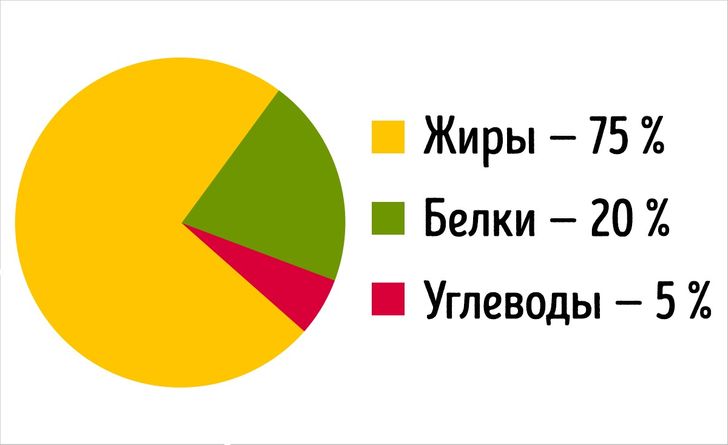
And you add intermittent fasting to this. This means that a long time passes between meals.
For example: you eat at 6:00 p.m. the previous day, wake up today, skip breakfast, and eat lunch, for example at 12–2 p.m.
As a result, you get a short fasting period. The second meal is again at 6 p.m.
And so every day.
In other words, you “fast” like this every day.
But at the same time, you eat as much as you want. You fast and you eat. Wonderful, isn’t it?
And you do not feel hunger or any kind of loss of strength as you do during fasting.
What can you eat?
Protein-rich foods, cheese, cottage cheese, nuts, milk, leafy greens, seaweed, etc.
And fatty foods, ordinary vegetable oils, butter, ghee, avocado, etc.
The transition to this type of diet should be abrupt. The transition takes 2–3 days. That is how long the body needs to understand that the diet has changed and that the emphasis is now on fats rather than carbohydrates.
I will say right away that Ayurveda has such a cleansing practice. It is called Panchakarma. Here at the Mahapurna School, I have spoken about it and even provided material on how to do it yourself at home.
So, it includes a keto diet. You eat vegetables and drink oil every day.
And this continues, for example, for 20–40 days. Some people do it even longer, since Panchakarma can vary in duration.
Ayurveda is thousands of years old, after all. You know this.
After about a month on the keto diet, you may be able to drink a glass of oil without any problem, in one gulp. Without any nausea. This will mean that the body has cleansed itself and switched to keto nutrition.
It is, so to speak, a test. Not a required one, but a test.
This test can help you understand that if you were to drink even three tablespoons of oil now, you would most likely feel nauseated—showing how far you are from keto nutrition.
I also wrote about the keto diet in my Ashram several years ago—here.
And about Panchakarma many years ago on my website: Your Yoga. Ayurveda.
I was born very close to the North Pole, or, put another way, well above the Arctic Circle. Without relying on any books, I personally know and have seen people—mainly Yakuts—who ate very fatty foods all their lives. Moreover, you yourselves know that the Chukchi literally drink seal fat.
But you cannot even imagine the conditions in which they live. If heat can still somehow be endured, the cold—extreme cold—is a very harsh way of life.
And they live there.
And they live there, I assure you, in a completely keto state. Superhuman strength is literally needed to live and survive there. And I am sure that this is partly thanks to their keto diet.
In India, people eat very fatty food; they cook with ghee, clarified butter.
This has all broadly come to be called the keto diet, since many people use it for weight loss. But that is incorrect. Because living keto is, in fact, a way of eating.
So, many people have become lost among this multitude of videos. Essentially, they no longer understand what it actually is or what they are supposed to do.
Therefore, in brief, it looks like this:
You completely give up all grains.
You give up all sugars, whatever form they may take. This means any sugar: white refined sugar, brown cane sugar, and the sugar found in honey, dried fruit, juices, etc. All these sugars may be consumed only in very small amounts—around 5%.
And you add intermittent fasting to this. This means that a long time passes between meals.
For example: you eat at 6:00 p.m. the previous day, wake up today, skip breakfast, and eat lunch, for example at 12–2 p.m.
As a result, you get a short fasting period. The second meal is again at 6 p.m.
And so every day.
In other words, you “fast” like this every day.
But at the same time, you eat as much as you want. You fast and you eat. Wonderful, isn’t it?
And you do not feel hunger or any kind of loss of strength as you do during fasting.
What can you eat?
Protein-rich foods, cheese, cottage cheese, nuts, milk, leafy greens, seaweed, etc.
And fatty foods, ordinary vegetable oils, butter, ghee, avocado, etc.
The transition to this type of diet should be abrupt. The transition takes 2–3 days. That is how long the body needs to understand that the diet has changed and that the emphasis is now on fats rather than carbohydrates.
I will say right away that Ayurveda has such a cleansing practice. It is called Panchakarma. Here at the Mahapurna School, I have spoken about it and even provided material on how to do it yourself at home.
So, it includes a keto diet. You eat vegetables and drink oil every day.
And this continues, for example, for 20–40 days. Some people do it even longer, since Panchakarma can vary in duration.
Ayurveda is thousands of years old, after all. You know this.
After about a month on the keto diet, you may be able to drink a glass of oil without any problem, in one gulp. Without any nausea. This will mean that the body has cleansed itself and switched to keto nutrition.
It is, so to speak, a test. Not a required one, but a test.
This test can help you understand that if you were to drink even three tablespoons of oil now, you would most likely feel nauseated—showing how far you are from keto nutrition.
I also wrote about the keto diet in my Ashram several years ago—here.
And about Panchakarma many years ago on my website: Your Yoga. Ayurveda.
I was born very close to the North Pole, or, put another way, well above the Arctic Circle. Without relying on any books, I personally know and have seen people—mainly Yakuts—who ate very fatty foods all their lives. Moreover, you yourselves know that the Chukchi literally drink seal fat.
But you cannot even imagine the conditions in which they live. If heat can still somehow be endured, the cold—extreme cold—is a very harsh way of life.
And they live there.
And they live there, I assure you, in a completely keto state. Superhuman strength is literally needed to live and survive there. And I am sure that this is partly thanks to their keto diet.
In India, people eat very fatty food; they cook with ghee, clarified butter.
Last edited:


 . And those who worry about ulcers and eat as the doctor prescribed are precisely the ones who end up having all kinds of problems with ulcers and the like. A person can be 30 years old and have already had a tube down their throat a dozen times. Yet for some reason, it doesn’t help
  .
.
